Tips for running and hiking in the wild
Posted on fitness
Trail running, also known as forest running or landscape running, is a very challenging and exciting workout that combines running and hiking off paved roads. This sport connects you with nature and enables you to find yourself, push yourself to your limits and discover new perspectives for yourself.
Proponents of this discipline swear by it and Holmes Place expert Martyna Wiśniewska, one of these passionate athletes, helps us take a look at the secret of this sport.
How did you start trail running? Who do you think would enjoy trail running and do you think anyone can practice this sport?
After a few years as a “road runner,” I wanted to try something new. Trail running is good for exercising in nature and I've always really enjoyed that aspect. I also help organize CITY TRAIL 5km races, a type of trail run in city parks or forests. I've always been fascinated by this kind of running. Anyway, I really started trail running after my first run in the mountains. Can anyone practice this sport? Yes! Running and hiking in nature is like therapy — not only for the body but also for the soul.
What are the most important tips for someone interested in trail running?
Find hiking trails or trails near you
As with any sport, trail running requires you to train regularly. Start in a forest or other asphalt-free trail near you. You don't have to climb any notorious hiking trails in the mountains at the beginning. You will be surprised what beautiful trails there are in your area — they are happy to be discovered by you!
Get the equipment you need
Running on hiking trails is different from running on the road and sooner or later you'll need the right equipment to do so. Trail running shoes are different from normal running shoes. These have a special sole with better grip for muddy or wet roads and the material is generally more robust. For long-distance runs, you also need a special backpack to store water, food and extra clothing.
Speed and distance: Be aware that a trail run can vary depending on the nature of the terrain. It is best to run according to time instead of dictating yourself a fixed pace or a fixed distance. As a beginner, it is an advantage if you first discover laps and routes for yourself that you can easily repeat.
Run slowly
You don't have to sprint uphill — keep your training level as consistent as possible and hike on steep hills as often as possible.
What do you see as your best reward when it comes to trail running? How do you feel about it?
I love the fact that my environment is changing — I have a sense of adventure. Being outside in nature gives me a feeling of freedom and I can clear my mind in the process. There's no better place to run or hike when you're accompanied by the sounds of wildlife.
We know you're celebrated for your trail running successes. Can you tell us which awards you have already received?
Well, my biggest success was first place in the 23km Forest Run (Winter Edition) and 4th place in a 50km run called “Chudy Wawrzyniec” in the Beskid Żywiecki Mountains. I have already taken part in the most popular 77km long ultra race called “Butcher Race” in the Bieszczady Mountains in Poland three times. Even with all these awards, I still can't say that I'm a very experienced trail runner. I know there's still a lot to do and I'm busy working out, but at the same time I'm enjoying every aspect of trail running.
What do you think are the best hiking trails in the world?
There are so many great hiking trails in the world, it's hard to choose the best. It depends entirely on the respective preferences. I try to combine my trips with discovering new trail running routes — it also allows me to get to the most popular tourist attractions faster! Of course, one day I would like to explore the Grand Canyon in the USA and the Tour de Mont Blanc hiking trail in France, where the most famous cross-country run in Europe is held.
Exercises to improve your trail run
If you have a taste for it, we have a few practice tips for you. Your club is also an excellent place to prepare you for the running hiking experience and train your body specifically for it. Here are our top tips:
Deep squat
Repetitions of deep squats (full squats) will increase your muscle strength, you can climb steep hills more easily, have a longer stride length and a stronger and safer gait, reducing the risk of injury.
Bosu ball training
Training balance and balance with the help of the Bosu Ball will help you reduce the risk of injury, stabilize your foot position and improve proprioception (the perception of body movement and position in space or the position/position of individual body parts relative to each other).
Upper body workout
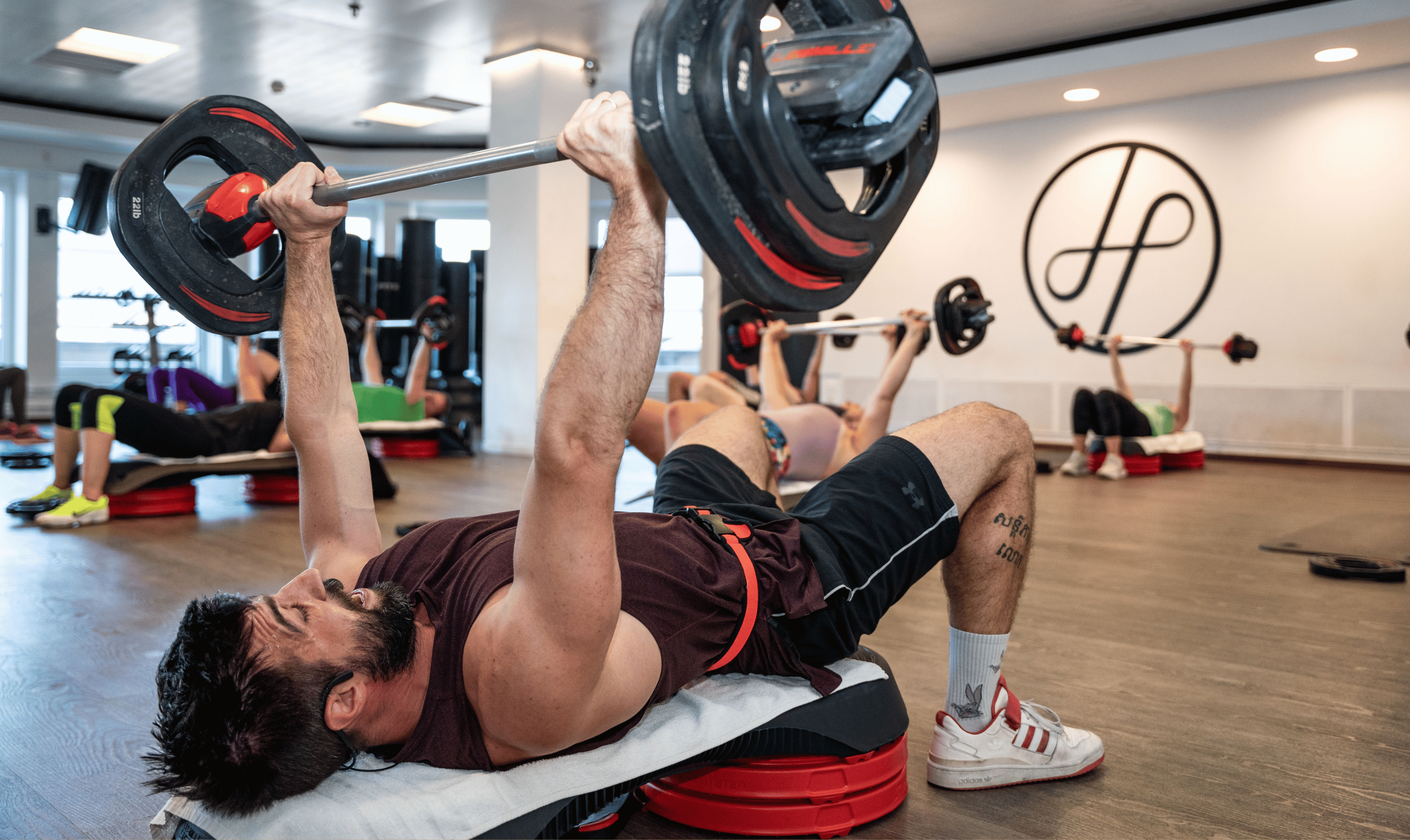
The upper body isn't usually a trail runner's main concern, but if you train it more and increase muscle mass and physical strength, you'll be able to balance your movements better and improve your resistance during long-distance runs and run even faster.
Posted on fitness