What is sciatica and how to deal with common causes of leg pain? - by MD Thordis Berger
You've probably heard of sciatica before, but do you know exactly what it is and what you can do about this specific pain? ' , 'What is sciatica? ' ,”, 'What are the symptoms of sciatica? ' , 'How do you treat sciatica?
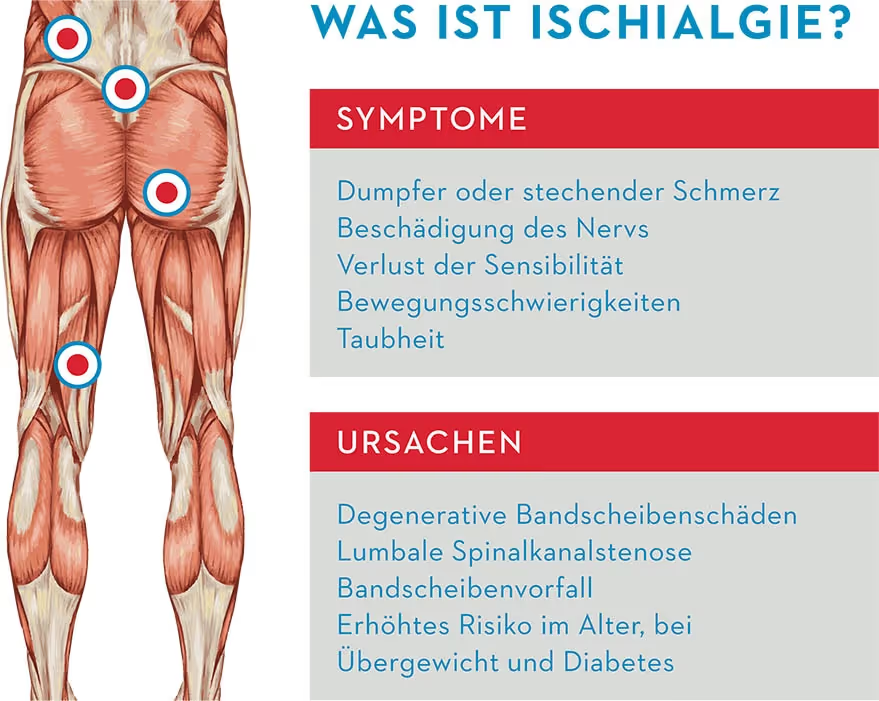
Sciatica (sciatica for short) refers to pain caused by the sciatic nerve. The sciatic nerve carries information from the brain to the legs via the spinal cord. This specific pain typically extends from one side of the lower back to the leg, often down to below the knee. The most common cause is a leakage of intervertebral disc tissue above a certain level. Intervertebral discs are tire-like structures that sit between the bones of the spine. A herniated disc occurs when parts of the gelatinous nucleus move out of the outer ring into the spinal canal and compromise or inflame the surrounding nerves. Sciatica mostly occurs in people in old age between 30 and 50 on.
What are the symptoms of sciatica?
The symptoms of sciatica usually get worse when sitting or coughing and are often accompanied by numbness or tingling in the leg. A physical examination will find out whether the sciatic nerve is affected and check whether there is any weakening and reflex reduction in the legs.
Even though the causes of sciatica are usually not worrying, you should still see a doctor if you experience pain in the sciatic nerve so that you can get a clear diagnosis and correctly treat the pain accordingly.
In order to diagnose sciatica, a detailed analysis of the patient's history and a specific examination of the patient are necessary. Imaging techniques (such as MRI or X-ray) should only be prescribed for very severe pain.
How to treat sciatica
The treatment focuses on pain management and on keeping those affected as active as possible.
In most cases, symptoms subside after a few weeks without the need for surgery or injections. If surgery is still necessary, the intervertebral disc tissue that hits the nerve and causes the pain is removed. However, 5-10% of those who undergo surgery do not feel any improvement after the operation, or even complain of worse pain.
A physical therapist can create a personalized stretching and exercise routine and improve posture to take pressure off the sciatic nerve and thus reduce back pain.
It has also been proven that regular practice of yoga can not only alleviate sciatica but also prevent it. The best yoga positions are those that focus on the lower back and thighs and turn your hips outwards.
To learn more about the benefits of yoga and how to get started, click here.
_______________________________________
Sources
1. Herniated lumbar intervertebral disc. New England Journal of Medicine, May 2016.
2. Evaluating and managing acute low back pain in the primary care setting. Journal of General Internal Medicine, February 2001.
3. Disc Extrusions and Bulges in Nonspecific Low Back Pain and Sciatica: Exploratory Randomised Controlled Trial Comparing Yoga Therapy and Normal Medical Treatment. Journal of Back and Musculoskeletal Rehabilitation. April, 2015.